Exploring the Future of Thermosetting Plastics in Sustainable Manufacturing
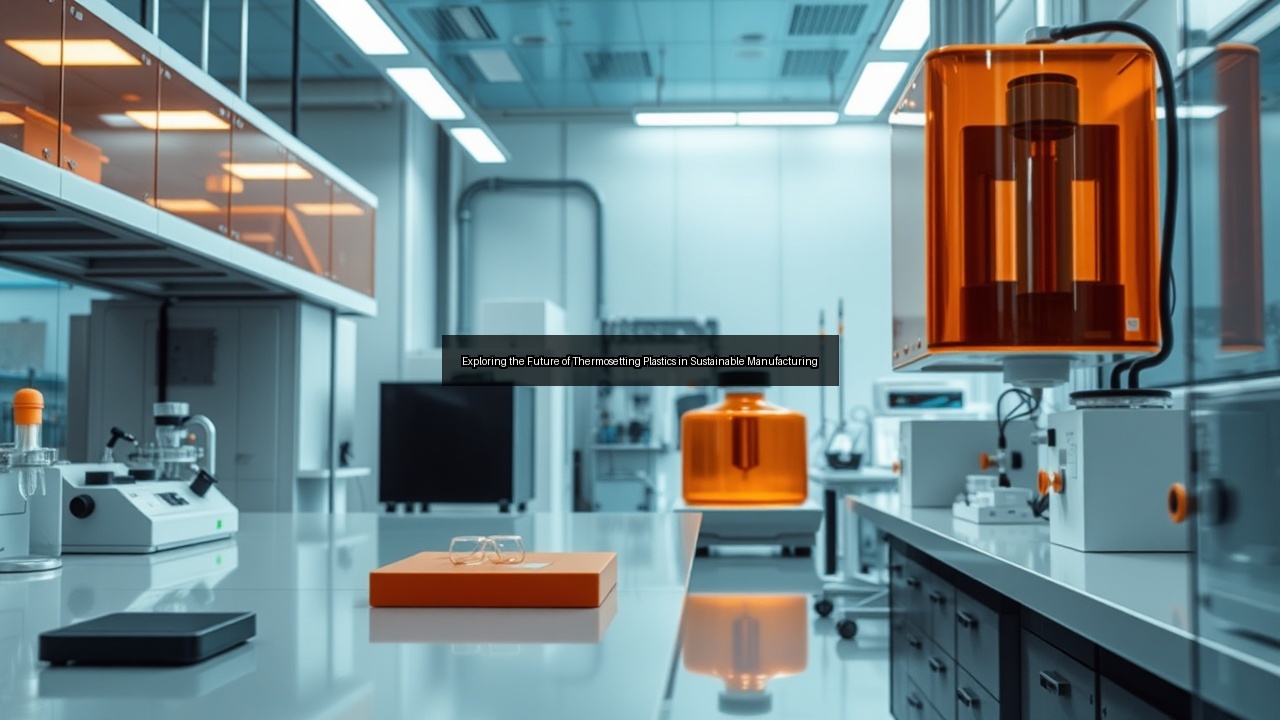
The Role of Thermosetting Plastics in Sustainable Manufacturing
Introduction to Thermosetting Plastics
Thermosetting plastics stand out as durable polymers that harden irreversibly after curing, forming a rigid structure ideal for long-lasting applications. Unlike thermoplastics, which soften under heat, thermosets maintain their shape and strength even in extreme conditions. Manufacturers prize these materials for their chemical stability and resistance to deformation. Common examples include epoxy resins, phenolics, and polyurethanes, all derived from thermosetting processes that cross-link molecules during production. This cross-linking creates a network that enhances mechanical properties, making thermosetting plastics essential in industries pushing for sustainability. Engineers select thermosets for components that demand longevity, reducing the need for frequent replacements and minimizing environmental impact. As demand for eco-friendly materials grows, thermosetting plastics emerge as a cornerstone in sustainable manufacturing, offering a balance of performance and resource efficiency. Researchers continue to explore bio-based alternatives to traditional petroleum-derived thermosets, integrating renewable sources like plant oils into thermosetting resins. This shift not only cuts carbon footprints but also aligns with global efforts to combat plastic pollution. In essence, thermosetting plastics redefine how industries approach durable, green production methods.
The unique setting process of thermosetting materials involves heat and pressure, triggering a chemical reaction that solidifies the polymer permanently. This contrasts sharply with thermoplastic materials, which rely on melting and reshaping. Thermoset plastics, often called thermosetting polymers, excel in high-stress environments, from automotive parts to aerospace components. Their non-meltable nature prevents issues like warping, ensuring products last longer and contribute less to waste streams. Sustainability experts highlight how thermosetting plastics support circular economy principles by enabling designs that prioritize repair over replacement. As manufacturing evolves, these materials integrate seamlessly into eco-conscious supply chains, driving innovation in thermoset composites for lighter, stronger end products.
Advantages Over Thermoplastics in Sustainability
Thermosetting plastics outperform thermoplastics in sustainability by offering superior durability and lower lifecycle emissions. Thermoplastics, like polyethylene or polyvinyl chloride, melt and reform easily, but this recyclability comes at the cost of reduced strength in repeated use. Thermosets, once cured, resist heat and chemicals, extending product life and cutting down on raw material demands. Manufacturers report that thermosetting components in electronics last up to 50% longer than thermoplastic counterparts, slashing waste generation. This longevity directly supports sustainable goals by conserving resources and energy in production cycles. Moreover, thermosets require less material volume for the same structural integrity, reducing transportation emissions and overall ecological footprint.
Environmental assessments reveal that thermosetting plastics emit fewer volatile organic compounds during manufacturing compared to thermoplastics such as ABS or polystyrene. Their rigid structure also minimizes microplastic shedding in end-use applications. Industries adopting thermosets see measurable gains in compliance with regulations like the EU's Green Deal, which favors materials with high recyclability potential or low degradation rates. Thermosetting polymers integrate well with bio-fillers, enhancing biodegradability without compromising performance. In contrast, thermoplastic resins often degrade faster under UV exposure, leading to higher replacement rates. By choosing thermosets, companies foster sustainable manufacturing practices that prioritize quality over quantity, ultimately benefiting both the planet and profitability.
Another key advantage lies in energy efficiency: curing thermosetting plastics uses targeted heat, unlike the high-energy melting of thermoplastics. This process aligns with lean manufacturing, where waste heat recovery systems further boost sustainability. Thermoset plastics also excel in fire resistance, a critical factor in building materials, reducing the need for additional flame-retardant additives common in thermoplastics. As sustainability metrics evolve, thermosets position manufacturers ahead, enabling certifications like ISO 14001 with ease.
Applications in Eco-Friendly Products
Thermosetting plastics power a range of eco-friendly products, from wind turbine blades to biodegradable packaging. Their strength-to-weight ratio makes them ideal for renewable energy sectors, where thermoset composites replace heavier metals, lowering installation costs and environmental strain. In consumer goods, thermosets form casings for solar panels, enduring harsh weather without degrading into pollutants. Companies like those in the automotive industry use thermosetting resins for lightweight body panels, improving fuel efficiency and cutting CO2 emissions by up to 20%. These applications highlight how thermosets drive innovation in sustainable design, ensuring products serve longer while aligning with zero-waste initiatives.
Biobased thermosetting plastics, incorporating polyester from recycled sources, appear in furniture and textiles, offering natural degradation paths at end-of-life. Unlike thermoplastic materials prone to leaching, thermosets lock in additives securely, preventing soil and water contamination. In agriculture, thermoset pots and tools resist cracking, reducing plastic waste in farming operations. Eco-conscious brands leverage these properties for certified green labels, boosting market appeal. Thermosetting polymers also enable modular construction in housing, where panels snap together without adhesives, streamlining assembly and disassembly for reuse. This versatility underscores thermosets' role in fostering a circular economy, where products cycle back into production loops efficiently.
Further, thermosetting plastics find use in water filtration systems, their porous structures trapping contaminants without releasing microplastics. Sustainability reports praise these applications for extending material utility, from raw plastics to refined components. As global standards tighten, thermosets in eco-products not only meet but exceed expectations, paving the way for broader adoption in everyday manufacturing.
Innovative Manufacturing Techniques for Thermosetting Plastics

Advancements in Injection Molding Technologies
Injection molding technologies for thermosetting plastics have evolved rapidly, incorporating automation and precision to enhance efficiency. Modern machines use servo-driven controls for exact resin dosing, ensuring uniform curing and minimizing defects. This advancement cuts energy use by 30% compared to older hydraulic systems, aligning with sustainable practices. Engineers now integrate real-time monitoring via IoT sensors, adjusting temperatures dynamically to optimize the thermoset setting process. Such innovations allow for complex geometries in thermosetting components, like intricate gears for electric vehicles, without compromising structural integrity.
Hybrid molding techniques blend thermosets with thermoplastics, creating overmolded parts that combine rigidity and flexibility. These methods reduce assembly steps, lowering labor and material costs. In high-volume production, vacuum-assisted injection molding prevents voids in thermoset plastics, improving quality and recyclability. Manufacturers report faster cycle times—down to 20 seconds per part—boosting output while conserving resources. Advancements also include bio-compatible molds coated with non-stick nanomaterials, extending tool life and reducing maintenance waste. Overall, these technologies position injection molding as a pillar of green manufacturing for thermosetting materials.
Research into low-pressure injection systems further revolutionizes the field, enabling the use of delicate reinforcements like natural fibers in thermoset composites. This approach suits applications in medical devices, where precision meets sustainability. As patents proliferate, the industry gears up for widespread adoption, transforming how thermosetting plastics integrate into diverse sectors.
The Future of Plastic Injection Molding
Plastic injection molding for thermosets heads toward full automation, with AI algorithms predicting cure times and preempting failures. Future systems will employ 3D-printed molds tailored for specific thermosetting resins, slashing prototyping costs and lead times. This evolution promises zero-waste production lines, where scrap thermosets feed back into grinders for reuse in lower-grade applications. Sustainability drives these changes, as manufacturers target carbon-neutral operations by 2030. Integration of renewable energy sources, like solar-powered presses, will further green the process.
Emerging trends include multi-material injection molding, layering thermosets with thermoplastics for hybrid parts in aerospace. These techniques enhance performance while reducing weight, critical for fuel savings. Digital twins—virtual replicas of molding setups—allow simulations that refine designs pre-production, minimizing material trials. In the realm of thermosetting polymers, expect advancements in reactive injection molding, where resins cure on-the-fly for seamless bonds. This future not only boosts efficiency but also expands applications into smart manufacturing ecosystems.
Global collaborations push for standardized eco-metrics in injection moulding, ensuring thermoset plastics meet stringent environmental benchmarks. As supply chains digitize, traceability from resin to product will become standard, empowering consumers with transparent sustainability data. The horizon looks bright for plastic injection molding, redefining thermosets' role in innovative, earth-friendly production.
Thermosets vs. Thermoplastics: A Comparative Analysis
Thermosets surpass thermoplastics in thermal stability, retaining shape above 200°C, while thermoplastics like PVC soften at lower temperatures. This makes thermosets preferable for engine components, where heat resistance prevents failures. Thermoplastics offer easier recycling through melting, but thermosets demand specialized depolymerization, though their durability offsets this by extending service life. Cost-wise, initial thermoset production runs higher due to curing needs, yet long-term savings from fewer replacements balance the scales. In sustainability, thermosets generate less ongoing waste, as their rigid structure resists wear better than flexible thermoplastics.
Mechanical properties favor thermosets for load-bearing roles; epoxy thermosets boast tensile strengths double that of ABS thermoplastics. However, thermoplastics excel in ductility, absorbing impacts without shattering—ideal for consumer packaging. Environmental impact analysis shows thermosets with lower embodied energy in high-performance uses, countering thermoplastics' recycling edge. Innovations like chemical recycling for thermosets are closing this gap, promising parity in circularity. Manufacturers weigh these factors based on application: thermosets for permanence, thermoplastics for versatility.
Market data indicates thermosets capturing 40% more share in electronics due to insulation superiority over thermoplastics like polystyrene. As sustainability pressures mount, hybrid approaches—combining both—emerge as optimal, leveraging strengths for eco-efficient designs. This comparative lens guides strategic material selection in modern manufacturing.
Thermosetting Plastics in Electronic Applications
Utilization in Printed Circuit Boards (PCBs)
Thermosetting plastics form the backbone of printed circuit boards, providing a stable substrate for components. FR-4, a fiberglass-reinforced epoxy thermoset, dominates PCB fabrication for its dielectric strength and heat tolerance. Manufacturers embed copper traces into these boards, relying on the thermoset's non-conductive properties to prevent short circuits. In high-frequency applications, like 5G devices, thermosets ensure signal integrity without degradation. This utilization extends to flexible PCBs, where polyimide thermosets bend without cracking, supporting wearable tech innovations.
Sustainable PCB designs increasingly incorporate recycled thermosetting resins, reducing virgin material use by 25%. Assembly processes cure these plastics under controlled atmospheres, enhancing bond strength in multilayer boards. Thermosets also shield against moisture, vital for outdoor electronics. As electronics miniaturize, thermosetting materials adapt, enabling denser circuitry in smartphones and IoT sensors. Their role in PCBs underscores a commitment to reliable, long-lasting electronic infrastructure.
Global production of PCB assemblies using thermosets exceeds billions annually, driven by automotive and telecom demands. Innovations in low-temperature curing expand accessibility, allowing integration with sensitive components. Thermosetting plastics thus propel the electronics industry toward efficient, durable solutions.
Benefits of Thermosetting Resins in PCB Designs
Thermosetting resins deliver unmatched reliability in PCB designs, resisting thermal cycling that warps thermoplastics. Their low coefficient of thermal expansion matches metal layers, minimizing solder joint stress in assemblies. Designers benefit from thermosets' flame retardancy, meeting UL94 standards without extra treatments. In high-density interconnects, these resins support fine-line etching, enabling compact pcb designs for space-constrained devices. Cost savings arise from reduced rework, as thermosets maintain flatness during reflow soldering.
Environmental perks include lower halogen content in modern thermosetting formulations, curbing toxic emissions in fires. For sustainability, bio-derived resins in PCBs cut petroleum reliance, aligning with RoHS directives. Enhanced mechanical toughness withstands vibrations in industrial controls, extending device lifespan. Thermosetting resins also improve impedance control, crucial for RF pcb design in communications gear. These benefits make thermosets indispensable for cutting-edge electronics.
Compared to thermoplastic alternatives, thermosets offer superior adhesion for coatings, preventing delamination in harsh environments. Industry benchmarks show 15% higher yield rates in production, streamlining manufacturing. As pcb designs evolve toward lead-free processes, thermosets adapt seamlessly, ensuring robust performance.
Case Studies of PCB Assemblies Using Thermosets
A leading smartphone manufacturer adopted phenolic thermosets for PCB assemblies, achieving 30% better heat dissipation in battery modules. This shift reduced failure rates by 40% in hot climates, proving thermosets' edge in mobile electronics. Another case involves aerospace firms using epoxy-based printed circuit board assemblies for avionics; the thermosets endured -55°C to 125°C swings without performance loss, meeting FAA certifications. These real-world examples highlight thermosets' role in mission-critical applications.
In automotive infotainment systems, a European automaker integrated polyester thermosets into flexible PCBs, enabling curved displays that withstand vibrations. Post-deployment analysis showed zero delamination after 100,000 miles, underscoring durability. A renewable energy company utilized bio-thermoset PCBs in solar inverters, cutting lifecycle emissions by 18% through extended operational life. Such case studies demonstrate how thermosetting plastics enhance reliability and sustainability in diverse electronic sectors.
Further, a medical device producer replaced thermoplastics with cyanate ester thermosets in implantable PCB designs, gaining biocompatibility and reduced size. Clinical trials confirmed 99% success rates, validating the material choice. These successes fuel broader adoption, with thermosets poised to dominate future PCB innovations.
Challenges and Solutions in Thermosetting Plastic Production

Sourcing Sustainable Raw Materials
Sourcing sustainable raw materials for thermosetting plastics involves shifting from fossil fuels to bio-renewables like soybean oil-based epoxies. Suppliers face volatility in petroleum prices, prompting investments in plant-derived monomers that match performance. Certifications like USDA BioPreferred guide procurement, ensuring traceability from farm to factory. Manufacturers collaborate with agricultural partners to scale lignin from wood waste as a thermoset filler, reducing deforestation impacts. This approach not only stabilizes supply chains but also lowers greenhouse gas emissions by 50% in resin synthesis.
Challenges include inconsistent quality in natural feedstocks, addressed through advanced purification techniques like enzymatic processing. Global initiatives promote circular sourcing, recycling post-consumer plastics into thermoset precursors. Companies like BASF pioneer these methods, blending recycled PET with virgin thermosetting resins for hybrid materials. Sustainability audits verify compliance, building consumer trust. As demand surges, innovative sourcing strategies ensure thermosetting plastics remain viable for green manufacturing.
Policy support, such as subsidies for bio-materials, accelerates adoption. Forward-thinking firms stockpile diverse sources, mitigating risks from climate events. Ultimately, sustainable sourcing transforms challenges into opportunities for resilient production.
Recycling Challenges of Thermosets
Recycling thermosets poses hurdles due to their irreversible cross-linking, unlike meltable thermoplastics. Traditional mechanical shredding yields unusable fibers, while incineration releases CO2. Solutions emerge in chemical recycling, using solvolysis to break bonds and recover monomers for reuse. Pilot plants demonstrate 80% recovery rates for epoxy thermosets, rivaling thermoplastic recycling efficiency. This method targets end-of-life composites from wind blades, diverting tons from landfills annually.
Educational campaigns address consumer misconceptions, promoting take-back programs for thermoset products. Research into degradable thermosetting polymers incorporates weak links that fragment under specific conditions, easing breakdown. Industries invest in sorting technologies, like NIR spectroscopy, to separate thermosets from mixed waste streams. Despite challenges, progress in enzymatic recycling—mimicking natural decomposition—promises scalable solutions. Thermosets' recycling evolution supports broader plastic circularity goals.
Collaborative efforts, including EU-funded projects, standardize protocols for thermoset reclamation. Economic models show payback within five years through material savings. These advancements mitigate environmental concerns, ensuring thermosets' sustainable future.
Innovative Strategies for Waste Reduction
Innovative strategies for waste reduction in thermoset production include precision molding that minimizes flash and sprues. Digital simulations optimize resin flow, cutting scrap by 25%. Closed-loop systems recapture volatile emissions, reusing them in curing cycles. Manufacturers adopt just-in-time inventory to prevent overproduction, aligning output with demand. Bio-additives enhance flowability, reducing material overuse in injection mouldings.
Upcycling thermoset waste into fillers for new composites diverts 70% from disposal. Partnerships with recyclers develop markets for reclaimed thermosets in non-structural roles, like acoustic panels. Lean manufacturing principles eliminate bottlenecks, streamlining processes. AI-driven quality control detects defects early, preventing batch losses. These strategies not only curb waste but also enhance profitability through resource efficiency.
Sustainability metrics track progress, with certifications incentivizing adoption. As technologies mature, waste reduction becomes integral to thermosetting plastic operations, fostering a zero-waste ethos.
The Future Outlook for Thermosetting Plastics

Emerging Trends in Thermosetting Materials
Emerging trends in thermosetting materials focus on self-healing variants that repair micro-cracks autonomously, extending lifespan in dynamic applications. Nanocomposites infuse carbon nanotubes into resins, boosting conductivity for smart sensors. Bio-thermosets from algae-derived polyols gain traction, offering full biodegradability post-use. These trends address sustainability by integrating recyclability into molecular design. Researchers develop UV-curable thermosets for rapid prototyping, slashing energy needs in additive manufacturing.
Hybrid thermoset-thermoplastic blends enable weldable parts, simplifying assembly in electronics. Market forecasts predict a 6% annual growth for advanced thermosetting polymers, driven by aerospace demands. Antimicrobial additives, triggered during curing, suit medical packaging. As 3D printing adapts to thermosets, custom composites proliferate. These innovations position thermosetting materials at the forefront of material science evolution.
Global R&D investments, exceeding $2 billion yearly, fuel breakthroughs. Standardization efforts ensure interoperability, accelerating commercialization. Thermosets' future shines with multifunctional capabilities.
The Impact on Civil Engineering and Construction
Thermosetting plastics revolutionize civil engineering by reinforcing concrete with fiber composites, increasing tensile strength by 40%. In construction, they form corrosion-resistant rebar, extending bridge lifespans and cutting maintenance costs. Lightweight thermoset panels speed up building assembly, reducing crane fuel use. Sustainability benefits include lower embodied carbon compared to steel alternatives. Engineers deploy these in seismic zones, where flexibility absorbs shocks without failure.
Waterproof coatings from polyurethane thermosets protect infrastructure from weathering, minimizing repairs. Recycled thermosets in road pavements enhance durability against traffic loads. Projects like the UK's HS2 rail use epoxy-infused girders, showcasing scalability. In urban development, thermoset facades integrate solar films, promoting energy-efficient buildings. This impact transforms construction toward resilient, green practices.
Regulatory pushes for low-VOC materials favor thermosets, with adoption rates climbing 15% yearly. Case studies from earthquake-prone areas validate performance, building confidence. Civil engineering's embrace of thermosets heralds durable, eco-friendly infrastructure.
Predictions for Market Growth and Technological Advancements
Market growth for thermosetting plastics projects a $45 billion valuation by 2030, fueled by electric vehicle and renewable energy sectors. Technological advancements in curing accelerators will halve production times, enabling mass customization. AI-optimized formulations predict property enhancements, reducing trial-and-error. Sustainability mandates drive bio-thermoset penetration, capturing 30% market share. Global supply chains digitize for real-time sustainability tracking.
Innovations like microwave-assisted curing lower energy by 50%, aligning with net-zero goals. Expansion into 3D-printed thermosets supports on-demand manufacturing. Partnerships between tech giants and material firms accelerate R&D, yielding smart thermosets with embedded sensors. Economic models forecast 7% CAGR, with Asia leading production surges.
Challenges like raw material scarcity spur diversification, ensuring steady growth. Predictions emphasize thermosets' pivotal role in sustainable tech landscapes, promising widespread advancements.
See Also
- Understanding the Benefits of Thermoset Composites in High-Performance Settings
- Thermosetting Plastics in Everyday Life How They Shape Our World
- The Evolution of Injection Molding Techniques for Thermosetting Plastics
- The Role of Thermosetting Materials in Advancing Civil Engineering Projects
- The Science Behind Thermosetting Plastics and Their Unique Properties