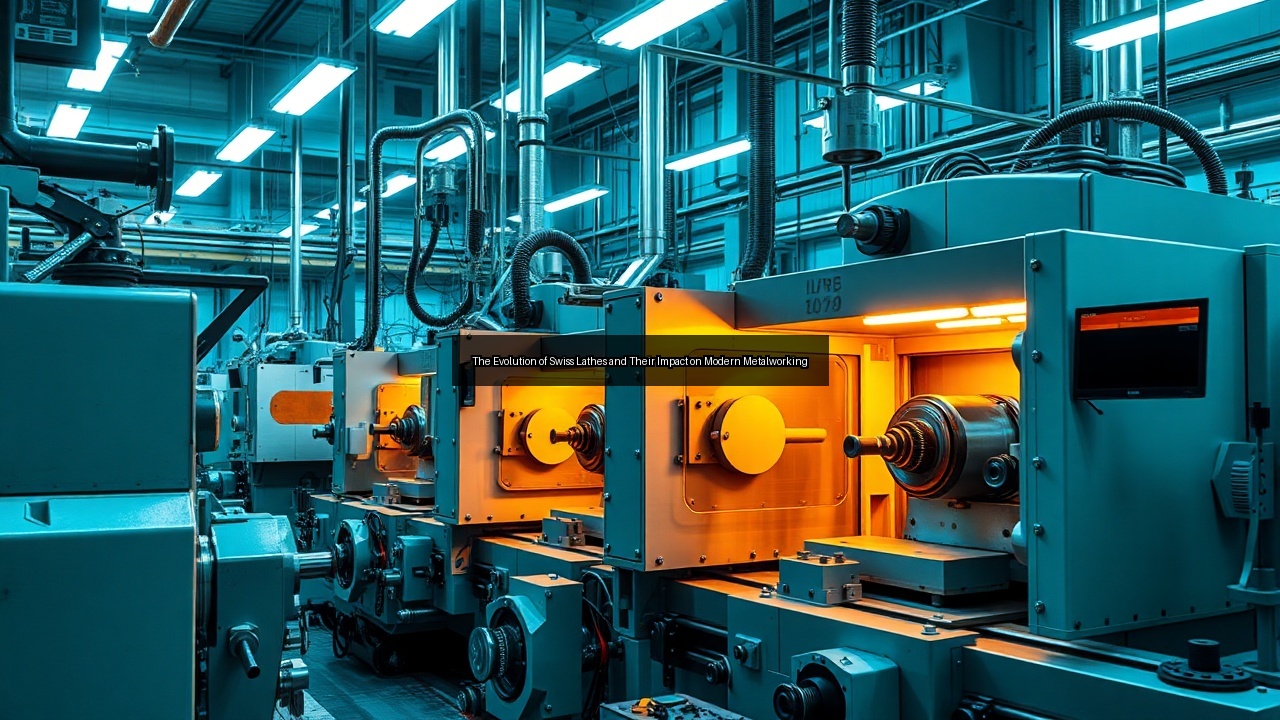
The Evolution of Swiss Lathes and Their Impact on Modern Metalworking
The History of Swiss Lathes
Origins of Swiss Screw Machining
Swiss screw machining began in the 19th century amid Switzerland's watchmaking industry. Craftsmen needed extreme precision for tiny components like screws and gears. Traditional lathes could not hold tolerances tight enough for these parts. The Swiss approach introduced a guide bushing that supports the workpiece close to the cutting tool. This setup reduced deflection during machining and allowed diameters as small as fractions of a millimeter. Early screw lathes operated manually, relying on skilled operators who adjusted feeds and speeds by hand. Demand grew from medical and instrument makers who required consistent, repeatable results. Swiss screw machining quickly became the standard for high-volume production of small, intricate metal parts that other methods could not achieve reliably.
Key Innovations in Swiss Lathe Design
Designers added the sliding headstock to move the bar stock through the guide bushing while the tool remained stationary. This motion kept the cut zone rigid and improved surface finish on long, slender parts. The addition of multiple tool stations allowed simultaneous operations such as turning, drilling, and threading without repositioning the workpiece. Ejectors later automated part removal, cutting cycle times further. These features distinguished swiss lathes from conventional metalworking lathes that lacked the same level of support and multi-axis coordination. Manufacturers refined collets and bushings to handle different bar diameters, expanding the range of screw machined components. Each advance built on the last, creating machines capable of tolerances measured in microns.
The Transition from Manual to CNC Swiss Lathes
Manual swiss lathes gave way to CNC models as computer controls replaced cams and levers. Operators now program tool paths directly, reducing setup time and human error. CNC swiss lathes store hundreds of part programs and switch between jobs quickly. The shift enabled complex geometries that once required secondary operations on milling machines or drill presses. Swiss screw machining gained speed and repeatability while maintaining the core guide-bushing principle. Shops that adopted early CNC machines captured new markets in electronics and aerospace. Today, most production runs on these programmable platforms because they deliver consistent quality across thousands of identical screw machined pieces.
Components of Swiss Lathes
Understanding the Tailstock: Function and Importance
The tailstock on a swiss lathe provides critical support for longer workpieces during turning. Unlike a standard center lathe, the swiss version often uses the tailstock in combination with the guide bushing for maximum rigidity. The tailstock can hold drills or reamers that perform operations from the opposite end of the bar. Precise alignment between the tailstock and the main spindle prevents taper and ensures concentric features. In high-volume swiss screw machining, the tailstock retracts automatically after each cycle to allow the barfeeder to advance fresh material. This coordinated movement keeps production flowing without manual intervention and maintains the tight tolerances required for medical and defense components.
Role of the Barfeeder in Efficiency
A barfeeder supplies continuous stock to the swiss lathe, eliminating the need to stop the machine for each new piece. Modern units handle bars up to several meters long and push material forward with servo motors for accurate positioning. When paired with a cnc lathe, the barfeeder communicates directly with the control to synchronize advancement with the machining cycle. This integration boosts throughput dramatically in swiss screw machining operations. Shops running 12mm or 16mm diameter stock rely on barfeeders to maintain lights-out production overnight. The device also reduces operator fatigue and scrap caused by improper manual loading, making the entire metalworking cell more productive and cost-effective.
Comparison with Traditional Metalworking Lathes
Traditional metalworking lathes such as turret lathes and center lathes support the workpiece only at the chuck or between centers. Swiss lathes add the guide bushing right at the cut zone, allowing much longer parts without chatter. Turret lathes excel at larger diameters and heavier cuts, yet they struggle with the slender, high-precision work typical of swiss screw machining. Center lathes offer versatility for one-off jobs but lack the multi-tool capability and automatic bar handling found on swiss machines. The result is that swiss lathes dominate production of parts under 16mm where concentricity and surface finish matter most. Many shops keep both types of equipment and route jobs according to size and tolerance requirements.
Technological Advancements in Swiss Screw Machining
The Rise of CNC Technology in Swiss Lathes
CNC controls transformed swiss lathes from mechanical marvels into highly flexible production tools. Operators enter offsets and tool paths through intuitive interfaces instead of grinding cams. Live tooling stations perform milling and cross-drilling without moving the part to another machine. Swiss screw machining now routinely achieves tolerances of ±0.005 mm on high-volume runs. Faster processors and better servo systems allow higher spindle speeds without sacrificing accuracy. Manufacturers continue to refine software that simulates entire cycles before any metal is cut, shortening development time for new screw machined components.
Integrating Milling and Threading Capabilities
Modern swiss lathes combine turning with milling and threading in a single setup. Live tools mounted on the gang plate or turret execute slots, flats, and threads while the bar remains supported by the guide bushing. This integration eliminates secondary operations that once added days to lead times. Thread whirling attachments cut precise threads on long screws in one pass. Milling spindles with y-axis travel create off-center features that previously demanded dedicated milling machines. The ability to complete complex parts entirely on the swiss lathe reduces handling damage and improves overall quality in swiss screw machining workflows.
Innovations in Tooling: Ejectors and Y-Axis Features
Ejectors push finished parts out of the collet automatically, preventing damage and enabling continuous cycles. Y-axis motion on the tool post adds another degree of freedom for milling operations perpendicular to the main spindle axis. These features expand the range of geometries possible in swiss screw machining without increasing machine footprint. Tool manufacturers developed quick-change holders that reduce setup time between jobs. Carbide and ceramic inserts optimized for small diameters last longer at the high speeds common on CNC swiss lathes. Together, these tooling advances keep swiss lathes competitive against newer five-axis milling centers for small-part production.
Applications and Impact on Modern Metalworking
Precision Machining and the 16mm and 12mm Limits
Swiss lathes excel at parts whose diameter stays within the 16mm and 12mm limits imposed by the guide bushing and spindle bore. Within these sizes, the machines deliver superior straightness and surface finish compared with conventional turning centers. Medical device makers produce bone screws and catheter components on 12mm swiss lathes because the process yields clean threads and consistent diameters. Electronics firms rely on 16mm machines for connector pins and sensor housings that must fit tight assemblies. The size constraint actually forces designers to optimize parts for swiss screw machining, often resulting in lighter, more efficient final products.
Case Studies: Industries Utilizing Swiss Screw Machining
Automotive suppliers use swiss lathes to create fuel injector components and transmission valves that demand zero leakage. Aerospace companies machine titanium fittings and actuator shafts on Tsugami machines for weight-critical assemblies. Watch and jewelry manufacturers continue the original tradition by producing tiny screws and gears on swiss lathes that hold tolerances impossible on turret lathes. Dental labs run 24-hour cycles of implant abutments using barfeeders and live tooling. Each sector benefits from the same core advantages of rigidity, precision, and unattended operation that define swiss screw machining today.
Comparison with Turret Lathes and Center Lathes
Turret lathes handle larger diameters and heavier stock removal but cannot match the finish or concentricity of swiss lathes on small parts. Center lathes remain useful for prototypes and repair work yet require constant operator attention. Swiss screw machining fills the niche for high-volume, high-precision runs where part diameter stays below 16mm. Many facilities operate all three machine types and select the platform based on batch size and tolerance needs. The choice often comes down to whether the job benefits from the guide bushing support unique to swiss lathes versus the flexibility of a turret or center lathe.
Future Trends in Swiss Machining
Emerging Technologies and Their Potential Impact
Artificial intelligence now monitors tool wear and adjusts feeds in real time on advanced CNC swiss lathes. Additive-hybrid machines combine swiss turning with laser deposition for complex internal features. Five-axis simultaneous machining expands the geometries possible without refixturing. These developments push swiss screw machining into new markets such as microfluidic devices and miniature robotics. Shops that invest early gain competitive edges through shorter cycle times and reduced scrap rates.
Sustainability and Efficiency in Metalworking
Modern swiss lathes consume less energy per part thanks to high-efficiency motors and optimized cutting parameters. Coolant recycling systems and chip conveyors reduce waste streams. Manufacturers design machines for easy maintenance, extending service life and lowering the environmental footprint of metalworking operations. Swiss screw machining supports near-net-shape production that minimizes material removal, conserving raw stock. These efficiencies align with industry goals for lower carbon output while maintaining the precision customers expect.
The Role of Companies like Tsugami in Innovation
Tsugami continues to lead by introducing models with faster rapids, larger tool capacities, and integrated inspection probes. Their machines support both 12mm and 16mm bar stock with quick-change guide bushings. Software suites from Tsugami allow offline programming and simulation that shorten time to first part. Partnerships with tooling suppliers yield specialized cutters for difficult materials. The company's focus on reliability keeps swiss lathes running at high utilization rates, driving broader adoption of swiss screw machining across precision industries worldwide.