The Role of Screw Conveyors in Modern Wastewater Treatment Processes

Understanding Screw Conveyors in Wastewater Treatment
Importance of Screw Conveyors in Wastewater Management
Screw conveyors play a pivotal role in wastewater treatment by efficiently transporting sludge, solids, and other materials through processing stages. These devices use a rotating helical screw blade inside a trough to move substances horizontally, vertically, or at an incline, ensuring smooth flow without clogs. In modern plants, they handle dewatered biosolids from digesters, preventing backups that could halt operations. Engineers design screw conveyors to withstand corrosive environments, incorporating stainless steel components for longevity. Their reliability reduces downtime, cuts labor costs, and supports compliance with environmental regulations. For instance, facilities along the coast rely on these systems to manage high volumes of industrial effluent, integrating seamlessly with pumps and screens. Screw conveyors also minimize material loss, preserving resources during transport from treatment tanks to drying beds. Overall, they enhance throughput, making wastewater treatment more efficient and cost-effective for municipalities and industries alike.
Types of Screw Conveyors Used in Treatment Plants
Treatment plants deploy various screw conveyor types tailored to specific needs, from horizontal units for short-distance sludge transfer to inclined models that elevate materials to higher levels. Shaftless screw conveyors excel in handling sticky or fibrous waste, avoiding jams common in shafted designs. Vertical screw conveyors lift dense sludge to dewatering centrifuges, conserving floor space in compact facilities. Customizable options include tubular housings for enclosed transport, reducing odors and contamination risks. Manufacturers often coat screws with abrasion-resistant materials to endure gritty wastewater particles. In large-scale operations, multiple screw conveyors link in series, forming a continuous system that processes thousands of gallons daily. These types integrate with automation controls for precise speed adjustments, optimizing energy use. Plants handling cement-like residues from chemical treatments favor robust, heavy-duty variants built for high torque. By selecting the appropriate type, operators ensure reliable performance across filtration, digestion, and disposal phases.
Comparing Flexible Screw Conveyors and Auger Conveyors
Flexible screw conveyors offer superior adaptability compared to rigid auger conveyors, bending around obstacles in tight plant layouts while maintaining material flow. Their helical screw within a flexible tube suits irregular paths, ideal for navigating around tanks in wastewater facilities. Auger conveyors, essentially straight shafted screws, deliver higher capacities for bulk solids but lack flexibility, limiting them to linear installations. Flexible models handle delicate or fragile materials without degradation, whereas augers excel in abrasive environments like those with sand or grit from stormwater runoff. Maintenance differs too: flexible units feature quick-disconnect parts for easy cleaning, reducing hygiene risks in treatment processes. Cost-wise, auger conveyors prove more economical for long, straight runs, but flexible screw conveyors justify higher upfront costs through versatile routing and minimal structural modifications. In practice, plants combine both—using augers for primary transport and flexible screw conveyors for secondary distribution—enhancing overall system efficiency in dynamic wastewater management.
Applications of Screw Conveyors in Various Industries
Role of Screw Conveyors in Agriculture
Agriculture leverages screw conveyors to streamline grain handling and fertilizer distribution, moving bulk commodities from silos to trucks with precision and speed. Farmers use these systems to transport harvested corn or wheat across vast fields, minimizing spillage and dust. In feed mills, screw conveyors blend additives into livestock rations, ensuring uniform mixtures that boost animal health. Their enclosed design protects sensitive grains from moisture along coastal regions prone to humidity. Portable screw conveyors mount on trucks for on-site use, facilitating quick loading during harvest seasons. Engineers customize trough angles to match terrain, preventing overloads in sloped barns. Beyond grains, they convey manure in dairy operations, supporting sustainable waste recycling into compost. This application cuts manual labor, accelerates throughput, and integrates with automated scales for inventory tracking. Screw conveyors thus fortify agricultural efficiency, from small farms to large agribusiness corporations.
Screw Conveyors in Paper Mills and Biorefineries
Paper mills depend on screw conveyors to shuttle pulp and waste fibers through pulping and recycling lines, maintaining consistent production flows. These systems transport wet stock from beaters to presses, handling high-moisture content without blockages. In biorefineries, screw conveyors move biomass like wood chips or agricultural residues to digesters, enabling biofuel extraction. They endure acidic conditions in paper processing, with corrosion-resistant coatings extending service life. Biorefinery operators use inclined screw conveyors to elevate feedstocks, optimizing space in multi-story facilities. Integration with shredders ensures even particle sizes, enhancing fermentation yields. Paper mills along industrial coasts employ sealed units to contain odors from lignin byproducts. Screw conveyors also aid in sludge dewatering, recycling water back into operations. Leading manufacturers offer variable-speed drives for these applications, fine-tuning rates to match energy demands. This versatility underscores their value in transforming raw paper and bio-materials into sustainable products.
Use of Screw Conveyors in Desalination Plants
Desalination plants utilize screw conveyors to manage brine concentrate and scale deposits, crucial for maintaining reverse osmosis efficiency. These systems remove precipitated salts from filters, transporting them to disposal areas without disrupting water production. In coastal desalination facilities, screw conveyors handle corrosive brines, featuring specialized alloys that resist chloride attack. Vertical models lift residues to overhead storage, freeing ground space for membrane arrays. Operators pair them with sensors to detect buildup, automating removal cycles. Screw conveyors also convey pretreatment media like sand or activated carbon, ensuring clean influent flows. Their low-maintenance design suits remote plant locations, reducing operational costs in water-scarce regions. Integration with truck-loading stations facilitates off-site waste hauling. As desalination expands globally, screw conveyors adapt to handle increasing volumes, supporting fresh water supply for urban and agricultural needs. Their role proves essential in turning seawater into viable resources.
Engineering Innovations in Screw Conveyor Systems
Recent Advancements in Screw Conveyor Design
Engineers revolutionize screw conveyor design with modular components that allow rapid reconfiguration for diverse applications, from wastewater to cement handling. Advanced materials like high-strength polymers replace traditional metals in non-corrosive zones, slashing weight and corrosion risks. Variable-pitch screws now adjust flight spacing dynamically, optimizing flow for varying material densities in treatment plants. IoT sensors embedded in housings monitor vibration and temperature, predicting failures before they occur. This engineering shift enhances safety, with automatic shutoffs preventing overloads during sludge surges. Hybrid designs combine screw and belt elements for hybrid transport in multi-phase processes. Recent patents introduce self-cleaning mechanisms, using rotating brushes to clear residues mid-operation. These innovations boost energy efficiency by up to 30%, aligning with green engineering standards. In wastewater contexts, such advancements ensure seamless integration with bioreactors, minimizing energy waste. Forward-thinking companies lead this charge, delivering systems that evolve with industry demands.
Case Study: Screw Conveyor Systems from James Eagen Sons
James Eagen Sons, a renowned manufacturer, supplied custom screw conveyor systems to a Midwest wastewater treatment plant, transforming its sludge handling capabilities. The project involved installing three shaftless screw conveyors to move dewatered biosolids from centrifuges to thermal dryers, spanning 150 feet with multiple inclines. Engineers at the company incorporated abrasion-resistant flights to combat gritty influent, extending lifespan beyond five years. Integration with existing roller conveyors allowed smooth handoffs, reducing transfer points and spillage. The systems featured variable-frequency drives for energy savings, cutting power use by 25% during peak loads. Post-installation, the plant reported zero downtime in the first year, crediting James Eagen Sons' precise engineering. This case highlights their expertise in tailoring solutions for harsh environments, including corrosion-proof coatings for coastal variants. As a family-owned corporation, they emphasize quality, delivering turnkey installations that boost operational reliability. Their screw conveyor systems exemplify how targeted innovations drive wastewater efficiency.
Impact of Engineering on Efficiency and Reliability
Engineering refinements in screw conveyors dramatically elevate efficiency and reliability, enabling plants to process more volume with fewer resources. Precision machining of helical blades ensures uniform material propulsion, slashing energy consumption in long runs. Robust bearings and seals withstand wastewater's abrasive particles, minimizing breakdowns that plague older models. Finite element analysis guides structural reinforcements, preventing failures under heavy loads like cement-thickened sludge. Automated lubrication systems extend intervals between maintenance, freeing staff for core tasks. Reliability surges with redundant drives, ensuring failover during power glitches. Engineering also incorporates noise-dampening features, improving worker conditions in bustling facilities. In agriculture tie-ins, similar designs handle grain without degradation, mirroring wastewater gains. These impacts translate to cost savings—up to 40% in lifecycle expenses—and heightened uptime. Leading engineering firms prioritize modularity, allowing upgrades without full replacements. Ultimately, such innovations fortify screw conveyors as indispensable assets in demanding sectors.
Selecting the Right Screw Conveyor for Your Needs
Factors to Consider When Choosing a Screw Conveyor
Capacity tops the list when selecting a screw conveyor, as it determines diameter and speed to match your throughput, whether hauling sludge or grain. Material properties like abrasiveness and moisture content dictate construction—opt for stainless steel in corrosive wastewater settings. Length and incline influence power requirements; steeper angles demand stronger motors to avoid stalls. Budget weighs initial costs against durability, favoring investments in low-maintenance designs from reputable manufacturers. Space constraints guide choices between flexible and rigid types, with the former suiting cramped plants. Energy efficiency matters too, especially in sustainability-focused operations, so seek variable-speed options. Compliance with industry standards, like those for food-grade agriculture or desalination, ensures safe integration. Finally, vendor support, including installation and parts availability, secures long-term performance. By evaluating these factors holistically, buyers secure screw conveyors that align perfectly with operational goals, enhancing productivity across applications.
How to Integrate Screw Conveyors with Roller Conveyors
Integrating screw conveyors with roller conveyors creates hybrid systems that fluidly transition materials from bulk to packaged forms in wastewater and beyond. Position screw outlets to feed directly onto roller inlets via chutes, minimizing drops that cause jams. Align speeds using synchronized controls, ensuring steady flow from screw propulsion to roller gravity assist. In treatment plants, this setup moves dewatered cake from screws to roller lines for bagging prior to truck transport. Flexible couplings absorb vibrations, protecting both components from wear. Engineers recommend modular junctions for easy adjustments during expansions. Safety interlocks halt operations if misalignments occur, preventing accidents. For agriculture, combining them handles grain from field screws to roller sorters seamlessly. This integration boosts overall line efficiency, reduces labor, and accommodates varying loads like cement bags. Proper planning yields robust, scalable solutions that streamline workflows.
Top Manufacturers of Screw Conveyors and Their Offerings
Leading manufacturers like KWS Engineering deliver comprehensive screw conveyor lines, from standard horizontal units to custom vertical lifts for wastewater demands. Their offerings include hygienic designs for food and pharma, extending to agriculture with grain-specific corrosion protection. Martin Sprocket excels in heavy-duty auger conveyors, ideal for cement and mining, boasting modular troughs for quick assembly. Flexicon Corporation specializes in flexible screw conveyors, providing portable models that suit mobile truck operations in biorefineries. James Eagen Sons stands out with tailored systems for paper mills, emphasizing durability in fibrous environments. Each company offers engineering consultations, CAD simulations, and aftermarket support to match client needs. Innovations like IoT monitoring feature in their premium ranges, enhancing reliability. Coastal desalination projects favor their saltwater-resistant variants. These manufacturers drive industry standards, supplying versatile screw conveyors that power diverse sectors with precision and innovation.
The Future of Screw Conveyors in Wastewater Treatment
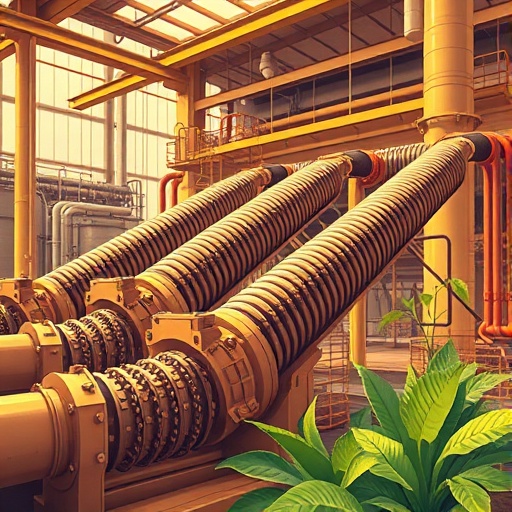
Trends in Wastewater Treatment Technologies
Advanced automation trends in wastewater treatment position screw conveyors at the forefront, with AI-driven controls optimizing speeds based on real-time sludge viscosity. Membrane bioreactors pair with enhanced screw systems to recycle nutrients, closing loops in zero-waste visions. Modular plants emerge, using prefabricated screw conveyors for rapid deployment in urban expansions. Nanotechnology coatings on screws repel biofilms, extending clean intervals in anaerobic digesters. Hybrid renewable integrations, like solar-powered drives, reduce carbon footprints in coastal facilities. Data analytics from embedded sensors predict maintenance, aligning with predictive trends across industries. Screw conveyors evolve to handle microplastics, incorporating finer flights for filtration aids. Global water scarcity accelerates adoption, with scalable designs supporting decentralized treatment. These trends promise resilient, efficient systems that adapt to regulatory shifts and population growth, ensuring sustainable wastewater management worldwide.
Sustainability Considerations in Conveyor Manufacturing
Manufacturers prioritize recycled materials in screw conveyor production, using upcycled steel from cement plants to lower embodied carbon. Energy-efficient motors and lightweight composites cut operational emissions, appealing to green certifications. Designs minimize water use in cleaning protocols, vital for wastewater contexts. Lifecycle assessments guide eco-friendly choices, from sourcing to end-of-life recycling. Biodegradable lubricants replace synthetics, reducing soil contamination risks in agriculture applications. Companies like those serving biorefineries incorporate modular parts to extend usability, curbing waste. Sustainability extends to packaging, with reusable crates for truck shipments. Coastal manufacturers focus on low-impact alloys to protect marine ecosystems. These considerations not only meet ESG goals but also yield cost savings through durable, efficient products. Forward-looking engineering ensures screw conveyors contribute to circular economies, balancing performance with planetary health.
News on Upcoming Innovations in Screw Conveyor Systems
Recent industry news highlights self-healing polymers for screw flights, allowing minor damages to repair autonomously in abrasive wastewater flows, as announced by a major engineering firm. Robotic integration promises automated assembly lines for custom conveyors, speeding delivery for desalination projects. A breakthrough in magnetic drives eliminates mechanical seals, boosting hygiene in paper mill applications. Venture funding surges for startups developing 3D-printed screw components, enabling rapid prototyping for agriculture needs. Trade shows buzz with wireless power systems, freeing conveyors from cables in remote biorefinery setups. Regulatory updates mandate smarter sensors, driving manufacturers to embed AI for predictive analytics. Coastal news covers corrosion-proof nanotech coatings, extending life in saline environments. James Eagen Sons teases hybrid roller-screw models for seamless transitions. These innovations signal a dynamic future, where screw conveyors become smarter, greener, and more integral to industrial evolution.
See Also
- Top Manufacturers Leading the Charge in Screw Conveyor Technology
- Understanding the Importance of Screw Conveyors in Paper Mill Operations
- Breaking News on the Latest Innovations in Screw Conveyor Design
- From Grain to Truck A Deep Dive into Screw Conveyors in Food Processing
- The Environmental Impact of Screw Conveyors in Cement Production