Unlocking Efficiency with High Volume Injection Molding Services
The Importance of High Volume Injection Molding Services
Understanding High Volume Injection Molding
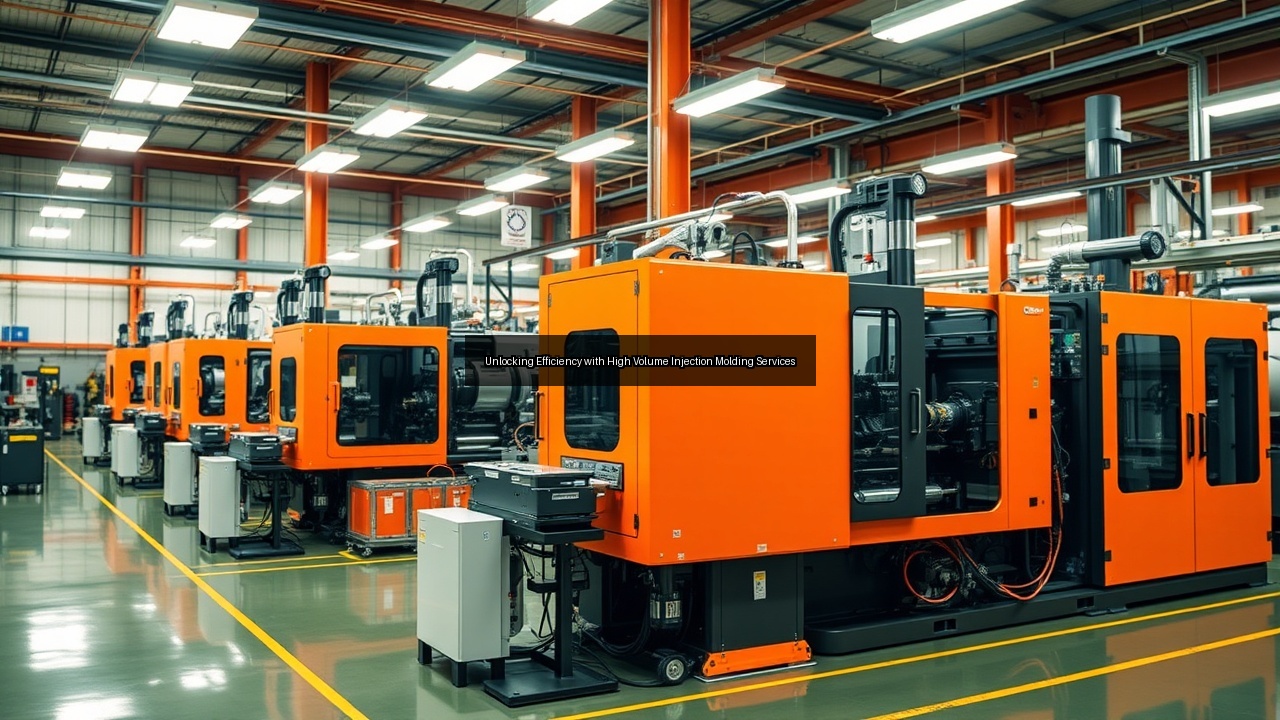
High volume injection molding services encompass a manufacturing process where molten plastic is injected into a mold to produce a large number of identical parts quickly and efficiently. This technique is essential in a variety of industries, as it allows for rapid production while maintaining high precision and quality. The process begins with designing an injection mold, which is then filled with thermoplastics or other suitable materials under high pressure. Once cooled, the mold is opened, and the finished parts are ejected for further processing. This method stands out due to its ability to produce complex geometries and tight tolerances needed in today’s competitive market.
Benefits of High Volume Production
The advantages of high volume production are numerous and compelling. First, it significantly reduces the per-unit cost of manufacturing. By producing large quantities, companies can spread the fixed costs of tooling and equipment over a more considerable volume, lowering the overall expenditure. Additionally, high volume injection molding services enhance efficiency, allowing businesses to meet large orders within tight deadlines. The speed of production also minimizes lead times and accelerates time-to-market for new products. Furthermore, the consistency and reliability of the parts produced ensure that manufacturers can maintain high quality standards, which is critical in industries such as automotive, medical, and consumer goods.
Key Industries Utilizing High Volume Molding
Various industries leverage high volume injection molding to enhance their production capabilities. The automotive sector, for instance, relies heavily on injection molded plastics for components like dashboards, interior trims, and housings. Medical device manufacturers benefit from the precision and reliability of high volume molding to produce items like syringes, connectors, and casings. Consumer goods companies also utilize this service for packaging, toys, and household items, where uniformity and quality are paramount. Electronics manufacturers use high volume molding for enclosures and components, ensuring that the parts fit together seamlessly. These industries showcase the versatility and essential role of high volume injection molding in modern manufacturing.
Materials and Techniques in High Volume Injection Molding
Thermoplastics: The Backbone of Injection Molding
Thermoplastics form the foundation of high volume injection molding services, providing the flexibility and durability required for various applications. Common thermoplastics include acrylonitrile butadiene styrene (ABS), polypropylene, polycarbonate, and polyvinyl chloride (PVC). Each material offers unique properties, such as impact resistance, chemical stability, and ease of coloring, making them suitable for different products. For example, ABS is widely used for its toughness and aesthetic qualities, while polypropylene is favored for its lightweight and chemical resistance. The choice of thermoplastic directly impacts the performance, cost, and functionality of the molded parts, making it crucial for manufacturers to select the right material for their specific needs.
Exploring Overmolding and Insert Molding Techniques
Overmolding and insert molding are two innovative techniques that enhance the capabilities of high volume injection molding. Overmolding involves molding a second layer of material over a previously molded part, allowing for the combination of different materials in a single product. This technique is particularly useful for creating soft-touch grips, multi-material assemblies, and products that require enhanced aesthetics or functionality. On the other hand, insert molding allows manufacturers to embed metal or other components into the plastic during the molding process, improving the part's strength and functionality. Both techniques increase design flexibility and can lead to more efficient production processes by reducing assembly time and costs, making them invaluable in high volume applications.
Rapid Tooling for Efficient Production
Rapid tooling plays a significant role in high volume injection molding services, allowing companies to create molds quickly and at a lower cost. Traditional tooling methods often require extensive lead times and substantial investments, which can hinder the speed of product development. Rapid tooling utilizes advanced technologies like 3D printing and CNC machining to produce molds in a fraction of the time. This approach not only accelerates the prototyping phase but also enables manufacturers to test designs and make necessary adjustments before committing to full-scale production. As a result, rapid tooling enhances overall efficiency and responsiveness, allowing businesses to adapt quickly to market demands.
Cost Efficiency and Scalability in Plastic Injection Molding
Analyzing Cost Factors in High Volume Production
Cost efficiency in high volume injection molding hinges on several critical factors. First, the initial investment in mold design and fabrication can be substantial, but it becomes more manageable when spread across large production runs. Choosing the right materials also significantly impacts costs; selecting thermoplastics that offer a balance of performance and price is essential. Labor costs, energy consumption, and maintenance of injection molding machines further influence overall expenses. Companies must conduct thorough cost analyses to ensure they optimize their production processes while maintaining quality standards. By understanding these factors, manufacturers can make informed decisions that enhance profitability while delivering high-quality products.
Scalability: Meeting Demand with Efficiency
Scalability defines the ability of high volume injection molding services to adjust production levels in response to market demands. Manufacturers can easily increase or decrease output without compromising quality, thanks to the flexible nature of injection molding. As demand rises, companies can invest in additional machinery or optimize existing processes to enhance productivity. This adaptability is crucial in industries where market conditions fluctuate rapidly. Furthermore, the use of automated processes in high volume production allows for consistent quality and precision, making it easier to scale operations efficiently. Businesses that embrace scalability position themselves to respond effectively to changing consumer needs while maintaining a competitive edge.
Case Studies: Cost Savings through High Volume Services
Real-world case studies illustrate the cost savings achievable through high volume injection molding services. For instance, a major automotive manufacturer transitioned from traditional machining methods to high volume injection molding for producing dashboard components. This shift led to annual savings exceeding $500,000 due to reduced labor costs and material waste. Similarly, a consumer electronics company adopted high volume molding for its packaging needs, slashing production costs by 30% while improving the product's overall quality. These examples demonstrate how investing in high volume services not only enhances efficiency but also drives significant cost reductions, enabling companies to reinvest savings into innovation and growth.
Future Trends in High Volume Injection Molding
The Role of 3D Printing in Injection Molding
3D printing continues to influence the landscape of high volume injection molding services, offering new opportunities for innovation. This technology enables rapid prototyping and the production of complex parts that traditional methods might struggle to achieve. Manufacturers can create prototypes quickly, allowing for faster testing and iteration of designs. Additionally, 3D printing can produce low-volume molds that complement high volume production, making it easier to test new products before full-scale manufacturing. As 3D printing technology advances, it will likely become an even more integral part of the injection molding process, enhancing flexibility and reducing lead times for manufacturers.
Innovations in Material Science: Flexible Plastics and More
Recent advancements in material science have led to the development of flexible plastics and other innovative materials suitable for high volume injection molding. New formulations enhance the performance characteristics of thermoplastics, enabling manufacturers to create products that are not only strong and durable but also lightweight and flexible. These materials open up new design possibilities, allowing for the production of parts that can withstand extreme conditions or provide better user experiences. The ongoing research into biodegradable and sustainable plastics also signals a shift toward environmentally friendly solutions within the industry, aligning with consumer demand for eco-conscious products.
Automated Processes in High Volume Production
Automation plays a pivotal role in shaping the future of high volume injection molding services. Automated processes streamline production, reducing human error and increasing efficiency. Robotics and machine learning technologies enable manufacturers to monitor and control the injection molding process in real-time, resulting in consistent quality and reduced downtime. Automation also allows for the integration of smart manufacturing techniques, where data analytics help optimize production schedules and inventory management. As the industry embraces these advancements, companies can expect improved productivity and cost savings, reinforcing the importance of automation in the future of high volume injection molding.