Unlocking the Secrets of Precision CNC Turning for Metal Fabrication
Understanding Precision CNC Turning in Metal Fabrication
The Basics of CNC Turning
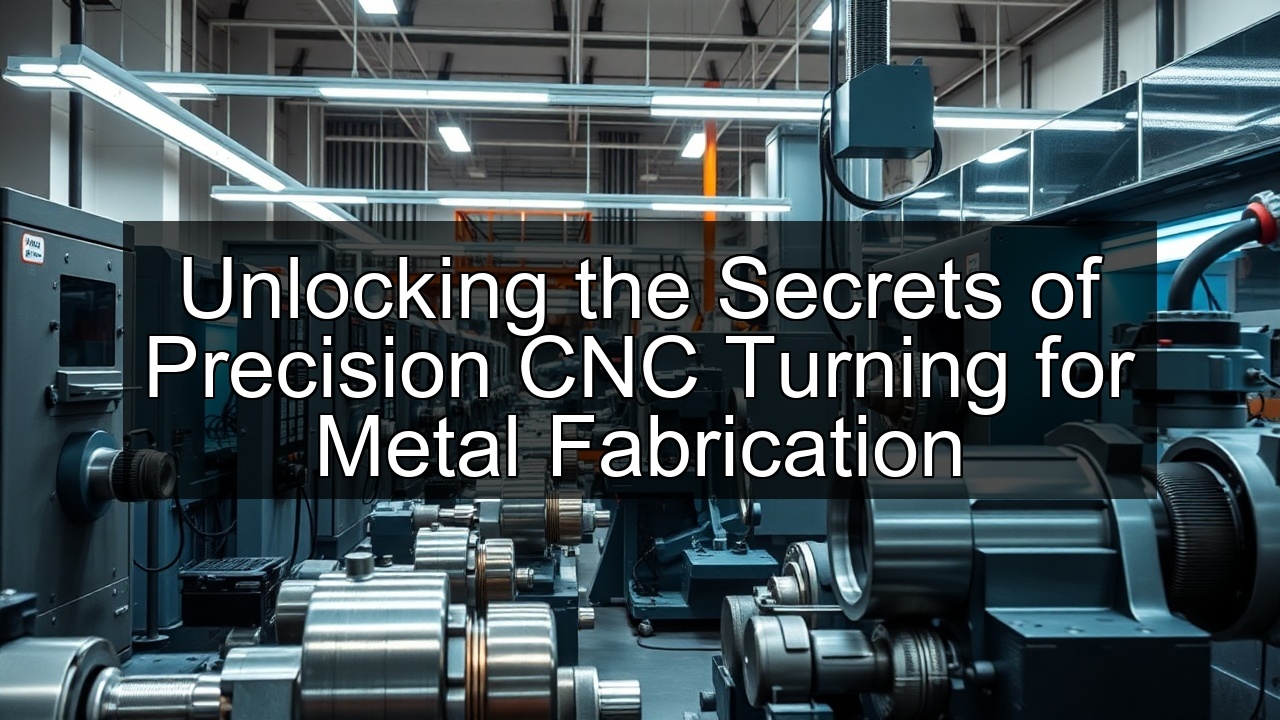
Precision CNC turning revolutionizes metal fabrication by rotating workpieces against cutting tools to create cylindrical parts. Engineers program computer numerical control (CNC) machines to execute precise movements, ensuring consistent results in high-volume production. A CNC turning center clamps the metal stock in a chuck and spins it at high speeds while the tool removes material layer by layer. This process excels in producing screws, shafts, and bushings with tight tolerances down to microns. Unlike manual methods, CNC turning minimizes human error and speeds up operations in machine shops. Drilling operations often integrate into the setup, allowing holes to form along the axis without repositioning. Swiss lathe variants add sliding headstocks for long, slender parts like medical device components. Fabricators rely on this technique for its versatility in handling various geometries, from simple rods to complex contours. Overall, mastering CNC turning basics empowers manufacturers to deliver machined parts that meet demanding specifications in industries like aerospace and automotive.
Importance of Precision in Metal Fabrication
Precision CNC turning stands as the cornerstone of quality metal fabrication, where even minor deviations can compromise structural integrity or functionality. Tight tolerances ensure components fit seamlessly in assemblies, reducing assembly time and enhancing reliability. In precision machining, achieving surface finishes as smooth as Ra 0.8 microns prevents wear and extends part lifespan. This level of accuracy proves vital for applications like medical devices, where biocompatibility and exact dimensions save lives. Metal fabrication shops prioritize precision to comply with industry standards, avoiding costly rework or recalls. Advanced CNC turning services incorporate real-time monitoring to adjust for tool wear, maintaining consistency across batches. Without precision, issues like vibration in rotating parts or leaks in fittings arise, leading to failures. Fabricators invest in precision CNC lathes to handle intricate geometries, such as internal threading for hydraulic components. Ultimately, precision drives efficiency, cuts waste, and builds trust with clients seeking reliable CNC turning shops.
Key Components of a CNC Turning System
A CNC turning system thrives on interconnected components that deliver unwavering performance in metal fabrication. The spindle motor powers the rotation of the workpiece, often reaching speeds over 5,000 RPM for efficient cutting. The chuck or collet grips the metal securely, while the tailstock supports longer pieces to prevent deflection. Tool turrets house multiple cutting tools, enabling quick changes without halting production. The control unit, powered by CAD/CAM software, interprets G-code to dictate axis movements—X for radial and Z for longitudinal. Coolant systems flood the cutting zone to dissipate heat and clear chips, preserving tool life. Bedways provide stability, guiding the carriage with minimal backlash. In precision CNC setups, servo drives ensure sub-micron accuracy. Machine shops customize these elements, adding features like bar feeders for continuous operation. Together, these components form a robust ecosystem for CNC machining, transforming raw metals into precision-engineered parts like custom screws and fittings.
Techniques and Tools in Precision CNC Turning
Lathe vs. CNC Lathe: What's the Difference?
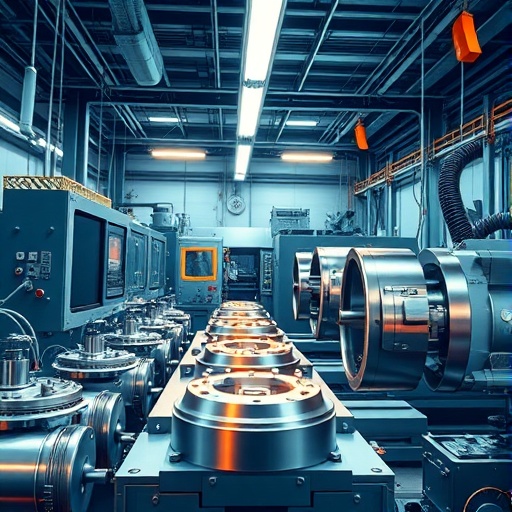
Traditional lathes demand skilled operators to manually control cuts, feeds, and speeds, limiting them to low-volume or prototype work in metal fabrication. CNC lathes automate these processes through programmed instructions, slashing production times and boosting repeatability for precision CNC turning. Operators set up a manual lathe by adjusting the tool post and compound rest by hand, whereas a CNC lathe uses servo motors for automated positioning. This shift allows complex geometries, like tapered shafts or multi-diameter profiles, without constant supervision. In CNC turning centers, live tooling integrates milling and drilling, expanding capabilities beyond basic turning. Manual lathes suit custom one-offs, but CNC versions dominate in machine shops handling high-precision orders. The precision CNC lathe features closed-loop feedback for error correction, achieving tolerances under 0.001 inches. Fabricators choose CNC for scalability, as it reduces labor costs and errors in producing items like threaded rods. Ultimately, CNC lathes elevate metal fabrication from craftsmanship to engineered efficiency.
Essential Tools for CNC Turning
CNC turning relies on a suite of specialized tools to shape metals with finesse and speed. Insert tooling, often carbide-tipped, handles roughing and finishing passes, enduring high temperatures during cutting. Boring bars extend into bores for enlarging holes with precision, while grooving tools carve slots or recesses for seals. Drills and taps integrate for on-machine hole-making and threading, streamlining workflows in CNC machining. Swiss lathe tools, with their sliding mechanisms, excel in small-diameter parts for medical devices. Fabricators select tools based on material—high-speed steel for softer metals, ceramics for hard alloys. Tool holders ensure rigidity, minimizing vibration that could mar surface finish. In precision CNC turning services, quick-change systems like VDI turrets swap tools in seconds, maintaining throughput. Broaching tools occasionally join for internal keyways, adding versatility. Proper tooling selection cuts cycle times and enhances part quality, making it indispensable in competitive machine shops focused on turning services.
Threading and Knurling Techniques
Threading in precision CNC turning creates helical ridges on screws and fasteners, using single-point tools or dies synchronized with spindle rotation. Programmers specify pitch and depth via G-code, ensuring uniform threads for secure mating. Internal threading employs rigid tapping cycles to form holes without chips packing. Knurling, meanwhile, imprints diamond or straight patterns on handles or grips, improving traction without removing material. CNC lathes use powered knurling tools that press rollers into the spinning workpiece, controlling pressure to avoid distortion. These techniques shine in metal fabrication for automotive knobs or tool handles. Advanced setups combine threading with knurling in one operation, optimizing efficiency. Precision demands careful speed control to prevent tool breakage on tough metals like stainless steel. Fabricators often post-process with disk grinding for refined surface finish. Mastering these methods allows CNC turning shops to produce functional, aesthetically pleasing components that meet exacting standards in precision manufacturing.
Materials and Their Applications in CNC Turning
Common Metals Used in CNC Turning
Aluminum dominates CNC turning for its lightweight strength, ideal for aerospace brackets and automotive pistons in metal fabrication. Stainless steel follows, prized for corrosion resistance in valves and fittings exposed to harsh environments. Brass offers machinability for decorative hardware and plumbing components, yielding smooth finishes with minimal tool wear. Steel alloys, like 4140, provide toughness for gears and shafts in heavy machinery. Copper suits electrical connectors due to conductivity, while its softness enables fast cutting speeds. In precision CNC turning services, machinists select these metals based on application—aluminum for prototypes, stainless for medical devices. CNC lathes handle diverse geometries, from thin-walled tubes to solid bars. Machine shops stock these for quick turnaround, ensuring clients get machined parts tailored to specs. Each metal's properties influence tooling choices, with coolant aiding chip evacuation. These common selections fuel innovation across industries, powering everything from consumer electronics to industrial equipment.
Challenges with Titanium and Tungsten
Titanium poses hurdles in CNC turning due to its low thermal conductivity, generating intense heat that accelerates tool wear during cutting. Fabricators combat this with flood coolant and sharp carbide inserts, slowing feeds to maintain precision in aerospace turbine blades. Its strength-to-weight ratio justifies the effort for medical implants and aircraft frames. Tungsten, denser and harder, resists machining, often requiring diamond-tipped tools for turning operations. High melting points demand rigid setups to avoid chatter, which ruins surface finish. In precision CNC machining, tungsten suits radiation shielding or high-wear parts like drill bits. Challenges include work hardening, where the metal toughens under stress, necessitating peck cycles in drilling. Machine shops invest in specialized CNC turning centers with high-pressure coolant for these exotics. Despite costs, their applications in defense and energy sectors reward the precision. Overcoming these obstacles through advanced techniques ensures reliable production of complex geometries.
Corrosion Resistance in CNC Machining
Corrosion resistance elevates CNC machining outcomes, especially for parts in marine or chemical environments. Stainless steel alloys like 316L excel in precision CNC turning, forming passive oxide layers that shield against rust. Fabricators apply coatings post-machining, such as anodizing on aluminum, to boost durability without altering tolerances. In metal fabrication, selecting corrosion-resistant metals prevents failures in pumps or pipes. CNC turning services incorporate waterjet cutting for hybrid processes, minimizing heat-affected zones that could compromise resistance. Titanium's natural oxide film makes it a go-to for implants, enduring bodily fluids. Machinists monitor pH in coolants to avoid etching during operations like threading or knurling. Surface finish plays a key role—smoother profiles reduce crevices where corrosion starts. ISO 9001-certified shops test machined parts via salt spray exposure. This focus ensures long-lasting components, from screws in offshore rigs to fittings in food processing, aligning with precision manufacturing demands.
Advanced CNC Techniques and Technologies
Integration of CNC Milling and Turning
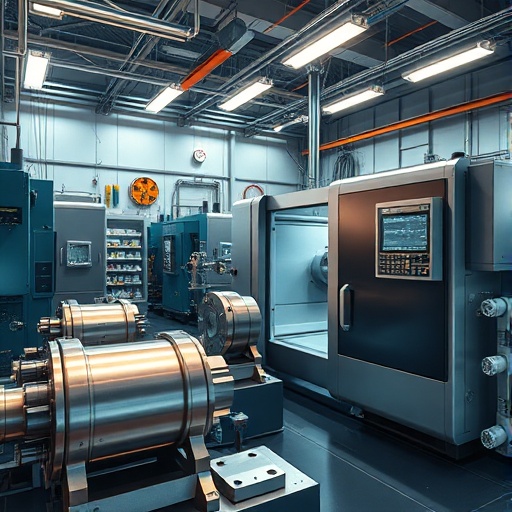
Integrating CNC milling and turning merges operations into single setups, slashing lead times in metal fabrication. Multi-axis CNC turning centers with live tooling perform milling on the lathe, creating flats, slots, and cross-holes without transfer. This hybrid approach suits complex parts like valve bodies, combining rotational turning with linear milling cuts. Precision CNC lathes equipped with Y-axis slides enable off-center drilling and contouring. Fabricators benefit from reduced fixturing errors and improved accuracy in geometries. In machine shops, software simulates paths to avoid collisions, optimizing tool paths. Applications span automotive transmission gears to medical device housings. CNC turning services leverage this for cost savings, as one machine replaces two. Advanced controls synchronize spindle and axis movements for seamless transitions. Overall, this integration propels efficiency, allowing precision machining of intricate components that manual methods can't match.
Wire EDM and Its Benefits
Wire EDM complements precision CNC turning by using electrical discharges to cut hard metals without mechanical force, ideal for thin slots or sharp corners in dies. A thin brass wire, guided by CNC controls, erodes material via sparks in a dielectric fluid, achieving tolerances of 0.0005 inches. Benefits include no tool wear and stress-free cuts, perfect for heat-sensitive tungsten parts. In metal fabrication, wire EDM follows turning for finishing intricate geometries unattainable by milling. Machine shops pair it with CNC lathes for prototypes, like aerospace fittings with internal splines. Its non-contact nature preserves surface finish, crucial for corrosion-resistant components. Setup involves programming wire paths, often integrating with CAD data. Despite slower speeds, precision outweighs drawbacks in high-value applications. Wire EDM expands CNC machining versatility, enabling fabricators to tackle challenges in medical devices and tooling.
Heat Treating and Surface Finish Considerations
Heat treating hardens or tempers metals post-CNC turning, enhancing wear resistance for tools and dies in metal fabrication. Processes like quenching and tempering alter microstructures, but require precise control to avoid warping turned parts. Fabricators outsource or integrate in-house ovens, followed by disk grinding to restore dimensions. Surface finish considerations start during machining—sharp tools and optimal speeds yield Ra values under 16 microinches. In precision CNC turning, vibratory finishing or electropolishing refines textures for medical screws. Corrosion resistance improves with smoother finishes, reducing initiation sites. Tailstock support during turning prevents bending in long shafts before treating. Machine shops document heat cycles per ISO standards for traceability. Balancing hardness with machinability ensures parts withstand operational stresses. These steps elevate raw machined components into durable, high-performance products across industries.
Quality Assurance and Standards in CNC Turning Services
ISO 9001 and Its Relevance to Precision CNC
ISO 9001 certification anchors quality assurance in precision CNC turning services, mandating documented processes for consistent output in metal fabrication. It requires risk-based thinking, from material selection to final inspection, ensuring defects plummet. Certified machine shops implement SPC (statistical process control) to monitor tolerances during turning operations. Relevance shines in auditing suppliers for stainless steel or titanium, verifying corrosion resistance. For CNC machining, ISO 9001 enforces calibration schedules, preventing drifts in lathe accuracy. Clients in aerospace demand this standard for traceable records on every screw or shaft produced. It fosters continuous improvement, like upgrading to swiss lathes for micro-precision. In evaluating turning services, ISO compliance signals reliability. Fabricators gain competitive edges, as certified operations reduce rework by up to 50%. This framework builds trust, enabling seamless partnerships in precision manufacturing ecosystems.
Calibration and Maintenance in Machine Shops
Calibration keeps CNC turning equipment razor-sharp, aligning axes and spindles to maintain micron-level precision in metal fabrication. Machine shops schedule laser interferometry checks quarterly, adjusting for wear in ball screws or encoders. Preventive maintenance includes lubricating ways and inspecting tooling for cracks, averting breakdowns during high-volume runs. In CNC lathes, tailstock alignment ensures even support for long parts, preventing taper errors. Technicians use CMMs (coordinate measuring machines) to verify geometries post-calibration. For tools like inserts, grinders restore edges, extending life in cutting stainless steel. Dust and chip buildup demands daily cleanings to safeguard electronics. ISO 9001 guides these protocols, logging every intervention. Neglect leads to scrapped batches, so shops train staff on predictive maintenance via vibration analysis. This diligence sustains peak performance, delivering flawless machined parts in competitive turning services.
Evaluating Precision CNC Turning Services
Evaluating precision CNC turning services starts with reviewing capabilities—look for multi-axis lathes handling your metals and geometries. Check ISO 9001 certification and client testimonials for proof of quality in CNC machining. Inquire about lead times, as efficient shops use bar feeders for rapid prototyping. Assess tooling versatility, from threading to knurling, and integration with milling or wire EDM. Visit the machine shop to gauge cleanliness and calibration rigor, ensuring surface finish meets specs. Request samples of past work, like titanium screws or stainless fittings, to verify tolerances. Cost transparency matters, balancing price with value in precision manufacturing. Related factors include sustainability practices, like coolant recycling. Top services offer design consultation, optimizing parts for CNC turning centers. By scrutinizing these elements, clients secure partners delivering innovative, reliable solutions in metal fabrication.